Law Professor · Legal AI Advisor · IP Attorney
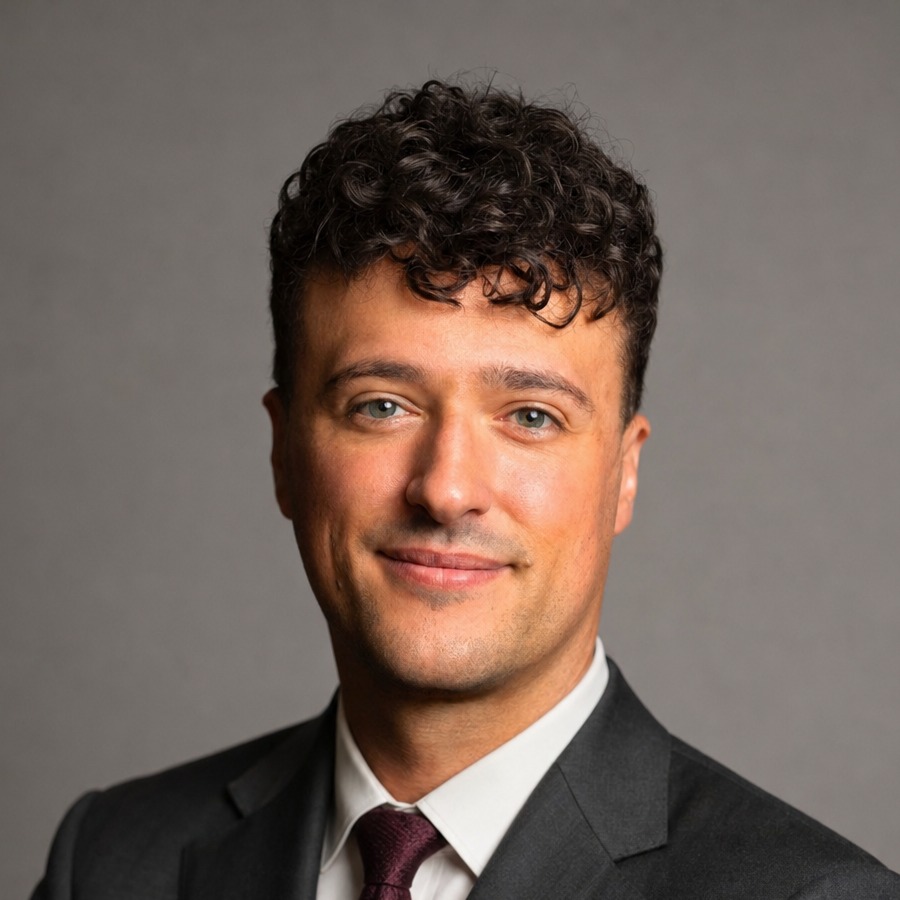
Thomas Reichert
I help law firms and legal departments use AI in ways they can measure and defend. My own work uses AI to study how the law actually works: large datasets of real decisions, models I fine‑tune myself, and results published in law journals.
Previously IP attorney at Kutak Rock and Bookoff McAndrews. Chair of the SIU Simmons Law School Ad Hoc AI Committee.
Talks and Advisory
- What AI Reveals About How the Law Actually Works Keynote or CLE
- Building Legal AI You Can Defend Ethics CLE
- From Pilot to Practice Leadership briefing
- Four Controls That Make Legal AI Defensible Advisory engagement
Recent talks Midwest IP Institute (Minnesota CLE, Sept. 2026) · Stanford Law School (IP Scholars Conference) · Northwestern Pritzker School of Law · Southeastern Association of Law Schools · Lawyers Association of Kansas City · Jackson County Bar Association CLE All talks →
Featured Research
Doctrine, Data, and the Death of DuPont
I used large language models to code roughly 4,000 decisions of the Trademark Trial and Appeal Board. A rule using two of the thirteen DuPont factors, mark similarity and goods relatedness, matched the Board’s outcome in 99.55% of 4,651 mark comparisons drawn from those decisions (one decision can compare more than one pair of marks). I checked the AI’s coding against my own review of 1,002 factor-level findings; they agreed 97.11% of the time (one reviewer, not blind to the model’s coding).
The Fair Use Database
Codes every substantive federal fair use opinion, with pin-cited court language. Its research assistant, Folsom, answers only from the coded corpus and cites the evidence behind every answer. Its outcome coding agrees with 453 human-coded analyses 97.4% of the time.
Coverage of the Research
This paper could be very useful… Empirical support for John Welch’s mantra, which turns out to be understated: mark and goods don’t predict 95% of the outcomes of 2(d) appeals to the TTAB, they predict 99%!
Rebecca Tushnet, Frank Stanton Professor of the First Amendment, Harvard Law School, 43(B)log (opens in new tab)
The 13-factor DuPont analysis to determine likelihood of confusion is not as complex as it appears when practicing before the Trademark Trial and Appeal Board… Just two of the factors can be used to predict whether the board finds challenged marks confusing 99.57 percent of the time.
MLex, “Only 2 of 13 DuPont Factors Decide Nearly All US TTAB Cases, Research Suggests” (Jan. 9, 2026). The published article reports 99.55%.
MarkSense Analytics. A platform built from my TTAB research data. It scores trademark similarity and likelihood of confusion against decided cases. About MarkSense →
Planning a CLE, Retreat, or AI Rollout?
Tell me what your group needs. I typically reply within one to two business days.